Key Takeaways: Standard single-button blazers often lack the structural weight required for high-stakes authority. The double-breasted power blazer solves this by creating a broader, more balanced shoulder line and a secure, architectural closure that commands attention. While minimal single-breasted jackets are standard for daily office wear, the double-breasted cut remains the gold standard for executive-level presentations and formal negotiations.
During a recent strategy session, a senior partner at a financial firm in Mumbai explained why she felt “under-dressed” for high-profile client acquisitions. She found that her standard, slim-fit single-button blazers lacked the visual “heft” she needed to project gravitas in a room full of senior stakeholders. She was seeking stylish formal wear women could rely on to shift the power dynamic in a boardroom-a garment that stood out as intentional, sharp, and undeniably professional.
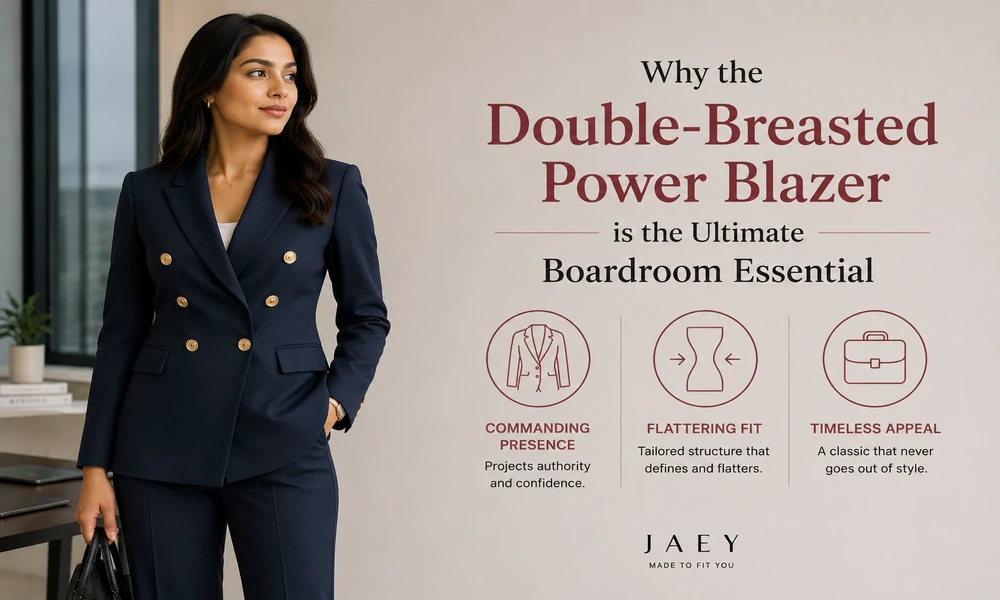
This is where the formal western dress for women principles of structured overlap meet the classic power blazer. The double-breasted design is, by its very nature, an architectural overlap. The two vertical rows of buttons create a sense of symmetry and width across the chest, which naturally balances the frame and adds a layer of formal protection. When buttoned, it creates a V-neckline that is deeper and more focused than a single-breasted cut, drawing the eye toward the face and creating a commanding, centralized focal point.
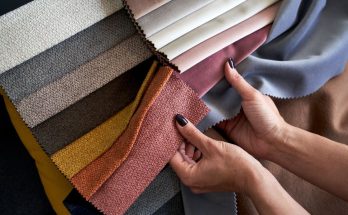
The secret to a successful double-breasted blazer is the balance between structure and drape. A heavy, stiff wool can feel like a costume in the Indian climate, while a flimsy fabric will cause the front panels to “sag” and look disheveled by noon. We utilize a high-density, mid-weight poly-viscose twill. This technical blend provides the “structural memory” needed to keep the lapels sharp and the front panels flat, while the breathable weave allows for comfort during long sessions in climate-controlled conference rooms.
Why the Double-Breasted Cut Defines Leadership
For women in executive roles, the double-breasted blazer is more than a garment; it is a tool of visual communication. It signals that you are not afraid to take up space and that you prioritize a polished, cohesive aesthetic. Unlike single-button jackets, which can feel casual when left open, the double-breasted jacket looks best when buttoned, creating a “uniform” that minimizes visual distractions and keeps the focus entirely on your message. It is the sartorial equivalent of a firm handshake-direct, traditional, and impossible to ignore.
Frequently Asked Questions
Should I wear a double-breasted blazer open or closed? For maximum authority and a clean silhouette, a double-breasted blazer is designed to be worn buttoned. If you choose to wear it open, ensure the rest of your outfit is highly tailored-such as a slim-fit turtleneck or a silk shell-to prevent the wide-open lapels from looking too voluminous.
Does the double-breasted design make me look broader? It adds a subtle horizontal element, which is actually a benefit if you have a narrow frame or sloped shoulders, as it provides visual balance. If you are concerned about bulk, choose a blazer with a “straight” cut rather than one that is heavily padded at the shoulders, and pair it with slim, monochromatic trousers.
How do I style this for a less formal office environment? You can modernize the look by pairing the blazer with high-waisted, ankle-length trousers in a complementary color and a pair of minimalist loafers. By keeping the blazer as the “statement” piece, you maintain a high level of professionalism while ensuring the overall look feels contemporary rather than stiff.