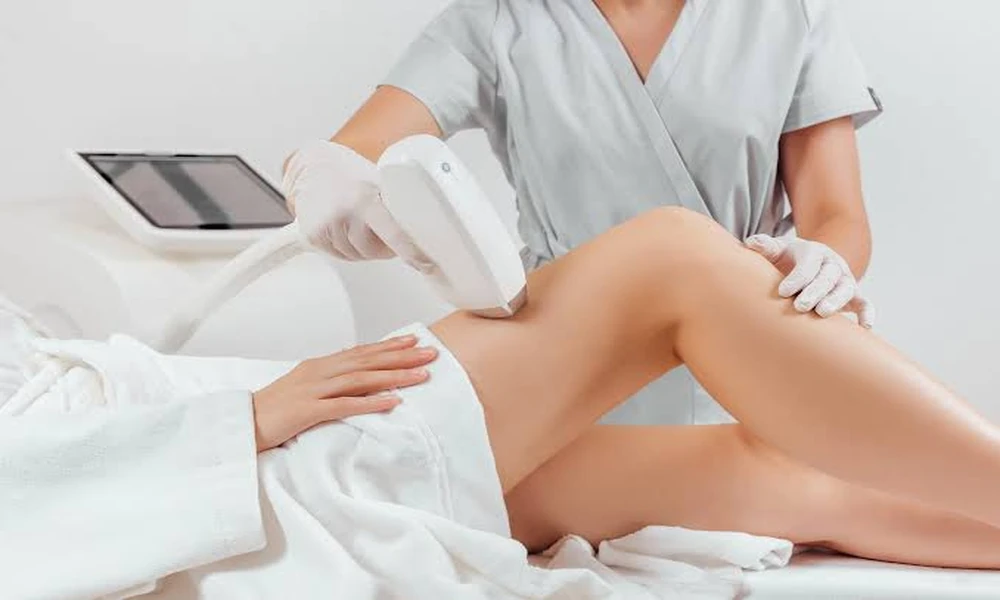
A sunless tanning product may avoid the UV exposure of a tanning bed, but that does not make it part of appropriate laser hair removal preparation. The American Academy of Dermatology explicitly advises against sunless tanners in its preparation guidance. Leave the colour product out of the plan and follow the instructions for your actual treatment, rather than assuming that UV-free means irrelevant.
A UV-free colour product still belongs in the preparation conversation
The AAD’s laser hair removal preparation page lists both avoiding tanning and avoiding sunless tanners. These are separate instructions. Replacing one activity with the other does not fulfil both, even if the replacement feels like a more careful beauty choice in another context.
The distinction matters when several plans share the same week. Someone may be preparing for a celebration, choosing clothes and arranging a hair-removal appointment. A self-tanner enters the shopping basket as an ordinary finishing product, without being considered alongside the appointment at all. It is the combination of plans that needs attention.
You do not need to invent a theory that cosmetic colour works exactly like a UV tan to follow the instruction. These are not interchangeable processes simply because both can change appearance. The relevant fact is narrower and sufficient: the preparation guidance specifically includes sunless tanners, so their lack of UV does not remove them from consideration.
A product description emphasising a temporary glow cannot decide compatibility with a laser appointment. Nor can a friend’s experience of using the same product before a different service. Keep the intended treatment and its directions attached to your decision instead of allowing the most reassuring line on the cosmetic package to answer a different question.
Change the cosmetic plan before opening the bottle
If you are considering Elysium Beauty’s Vaughan laser appointment, place the preparation instructions beside the other beauty choices before buying or applying a colour product. It is easier to leave an optional bottle unopened than to create a last-minute problem because several independent plans happened to meet on the same skin.
This does not require abandoning the occasion. You can choose clothing and the rest of the ordinary preparation without adding self-tanner to the area being discussed for treatment. Avoid making a matching skin colour the condition that every other arrangement must satisfy. A cosmetic preference can be revised without needing an urgent replacement product.
Consider products used without much thought as well as a deliberate full-body application. Check what the particular item actually is rather than relying on a familiar-looking tube. If its purpose includes adding a sunless tan and you are uncertain how the preparation guidance applies, keep it unused while obtaining the relevant answer.
Do not ask a sale deadline to set the timing. Buying a product at a reduced price does not oblige you to use it before the appointment, and a nearly empty bottle does not need to be finished immediately. A useful shopping decision sometimes consists of removing one step instead of finding a more elaborate way to fit it in.
There is also no value in choosing a shorter interval on your own because the application would be light or because you wash frequently. The AAD’s general instruction is not a personalised countdown. Get the applicable preparation advice early enough that you can organise the appointment around it, rather than calculating your own clearance date.
Tell the provider what is already on the skin
If you have already used a sunless tanner, report the product and when you used it. Include the actual areas where it was applied. This is useful information for the person responsible for assessing and treating you; it is not a test of whether your preparation was perfect.
Keep the package or product name available so the conversation concerns the item you used. “A tanning lotion” may be an honest starting description, but it is less specific than the identifiable product. If you cannot remember the date precisely, say that too rather than selecting a confident answer to avoid delaying the booking.
Do not scrub aggressively, apply a succession of removal products or try another internet technique to make the history disappear. A change in appearance would not erase the fact that something had been used. The provider needs an accurate account, not skin subjected to an extra experiment so the original appointment can seem ready.
Contact the provider before attending when preparation is uncertain, and let them explain whether the appointment needs to change. Do not conceal the issue because travel has been arranged or a deposit paid. Those commitments can be inconvenient to revisit, but they do not supply the information needed for a treatment decision.
Likewise, a photograph that appears to show no colour is not a substitute for that account. Lighting and a phone screen cannot clear the preparation. Tell the person assessing you what happened, then follow the actual directions rather than conducting your own test of whether the product is still visible.
Outdoor protection continues without a tanning goal
Leaving out self-tanner does not remove the separate need for sun protection. The AAD preparation guidance recommends daily sunscreen before going outdoors, specifying broad-spectrum, SPF 30 or higher and water resistance. It also advises against outdoor and indoor tanning. Follow the directions that apply to your skin and planned treatment.
Think about ordinary outdoor time as well as a holiday. Walking between errands or spending part of a day outside can be forgotten when the preparation plan focuses only on a formal tanning activity. Make the practical outdoor arrangements consistent with the instructions rather than treating the absence of a beach visit as the whole plan.
An event photograph is not a reason to add tanning back into the schedule. Choose the cosmetic details you can comfortably organise while respecting the preparation. If the date and the required directions do not fit, discuss the appointment timing instead of trying to make one product undo another choice.
The unopened bottle can simply remain unopened. If colour is already on the skin, give an honest account and obtain the provider’s direction. Either response is clearer than turning the evening before treatment into a hurried attempt to apply, remove and conceal a product that could have been left out of the plan.