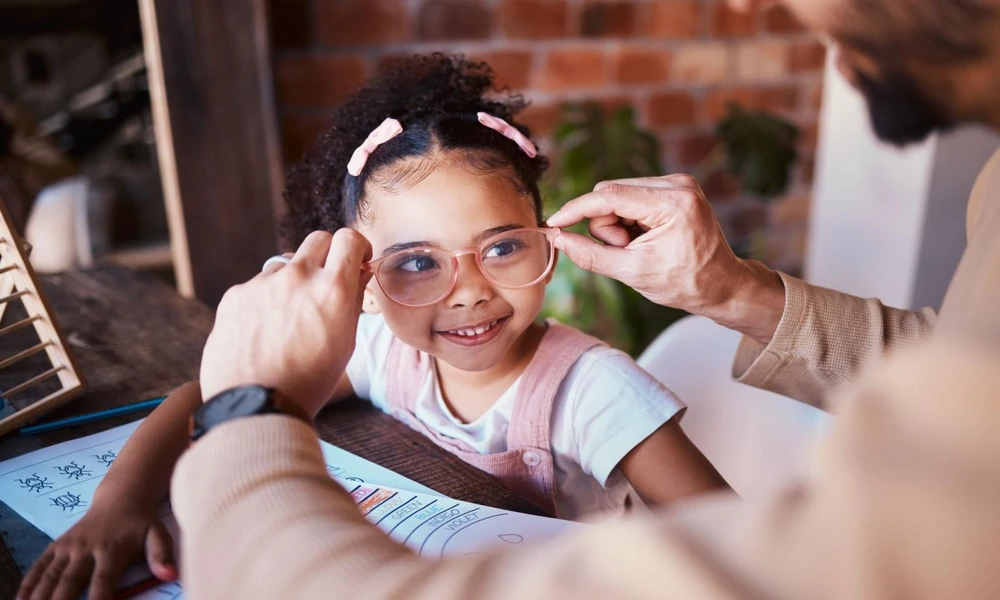
Children rarely stay still for long. They run, climb, jump and take part in school activities, so their eyewear needs to keep up. Choosing the right Glasses for children is not only about colour or style. A secure and comfortable fit can help a child see clearly without constantly pushing the frame back into place.
Start With a Proper Fit
Match the Frame to the Child’s Face
Children’s faces are smaller and shaped differently from adult faces. A frame that is too wide may slide down, while one that is too narrow can press against the temples. The bridge should rest comfortably on the nose without leaving deep marks, and the child’s eyes should sit near the centre of each lens.
Make Comfort a Priority
Even a durable frame will not help if a child avoids wearing it. Check for pressure behind the ears, tightness at the temples and eyelashes touching the lenses. Lightweight frames may feel more comfortable during long school days.
Look for Features That Support Movement
Flexible Frame Materials
Active children may accidentally bend their glasses while changing clothes, playing or placing them in a school bag. Frames made with flexible materials can be more forgiving than very rigid designs. Spring hinges may also allow the temple arms to open slightly wider without placing as much strain on the frame.
Flexibility does not make glasses unbreakable. Children should still remove them with both hands and keep them in a protective case.
Secure Temple Arms and Bridge Support
Temple arms should sit comfortably behind the ears and help prevent the frame from slipping forward. Silicone temple tips, ear grips or a fitted strap may provide extra stability for younger children.
Some children may need a lower bridge fit or adjustable nose pads, depending on their facial shape.
Choose Suitable Lenses
Consider Polycarbonate Lenses
Polycarbonate lenses are often recommended for children because they are lightweight and impact resistant. They are less likely to shatter than glass lenses, making them a practical option for everyday use.
A scratch-resistant coating may also be helpful. However, no lens is completely scratch-proof. Clean lenses with an appropriate solution and a clean microfibre cloth rather than clothing or paper towels.
Know When Sports Eyewear Is Needed
Regular prescription glasses should not be treated as protective sports equipment. In activities where a ball, racket, elbow or another object may strike the face, children may need specially designed sports eyewear with impact-resistant lenses.
The correct protection depends on the activity. Some sports call for protective goggles, while others may require a face guard or helmet. Parents should check the sport’s safety rules and ask an eye care professional whether prescription sports goggles are suitable.
Match the Glasses to Everyday Activities
School and Casual Play
For classroom use, playground time and normal outdoor play, useful frame features may include:
- Lightweight construction
- Flexible or spring hinges
- Smooth, rounded edges
- Secure temple tips
- A stable bridge fit
- Impact-resistant lenses
Parents should still inspect the glasses regularly for loose screws, bent temple arms or changes in fit.
Organised Sports and Swimming
Children who take part in organised sports may benefit from separate prescription sports goggles. A properly adjusted strap can keep the goggles secure without feeling painfully tight.
Ordinary glasses should be removed before swimming. Children who need clear vision in the pool can ask about prescription swimming goggles designed for water use.
Check the Fit as the Child Grows
Children can outgrow frames quickly. A pair that fitted well several months ago may begin pressing against the temples, slipping down or sitting unevenly.
Watch for frequent adjustments, red marks, headaches, damaged hinges or a child looking over the top of the lenses. These signs may mean that the frame needs professional adjustment, repair or replacement. Regular eye examinations can also confirm whether the prescription is still suitable.
Balance Practical Features With Style
The best eyewear for children combines clear vision, comfort and a secure fit. Style matters because children are more likely to wear frames they enjoy, but appearance should come after correct sizing and suitability.
Spectacle Hut carries kids’ optical frames and sunglasses and supports customised myopia management through its eye care professionals. Regardless of where a family shops, the final choice should reflect the child’s prescription, face shape, daily activities and comfort.
Final Thoughts
Active children need glasses that stay secure without feeling tight or heavy. A well-fitted frame, stable temple arms and impact-resistant lenses can make everyday wear easier. For higher-risk activities, ordinary Glasses for children are not a substitute for properly fitted protective sports eyewear. Regular adjustments can help keep the frame comfortable as the child grows.